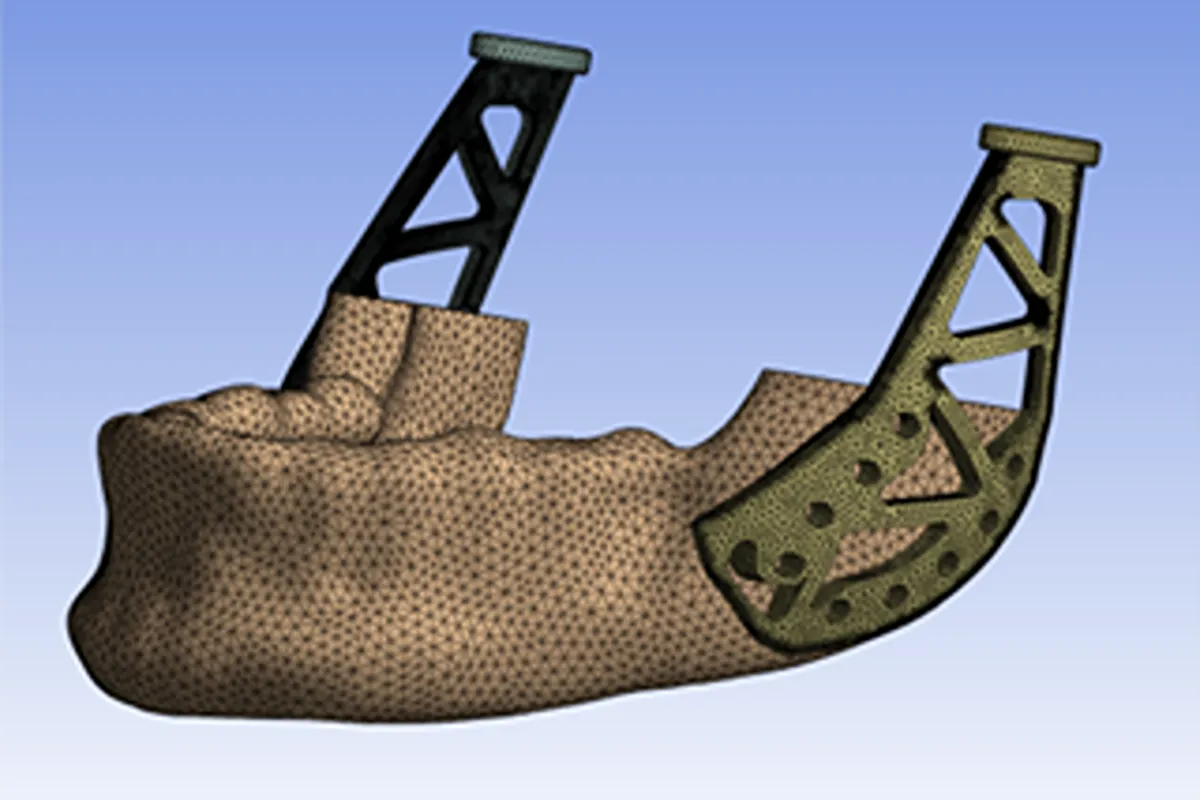
Generation 1 → generation 2
Ti-6Al-4V: 0.1314 → 0.0727 kg. The same geometric reduction is reported for 316L.
A lighter TMJ implant assessed through mesh convergence, fatigue and modal analysis rather than a single stress plot.
 Inspect full-size image ↗
Open a chapter to follow the work and the choices made along the way.
Generation 1 uses core hollowing and ribs; generation 2 removes low-strain-energy material to form a fishbone-like structure. Fillets and load paths guide the revisions.
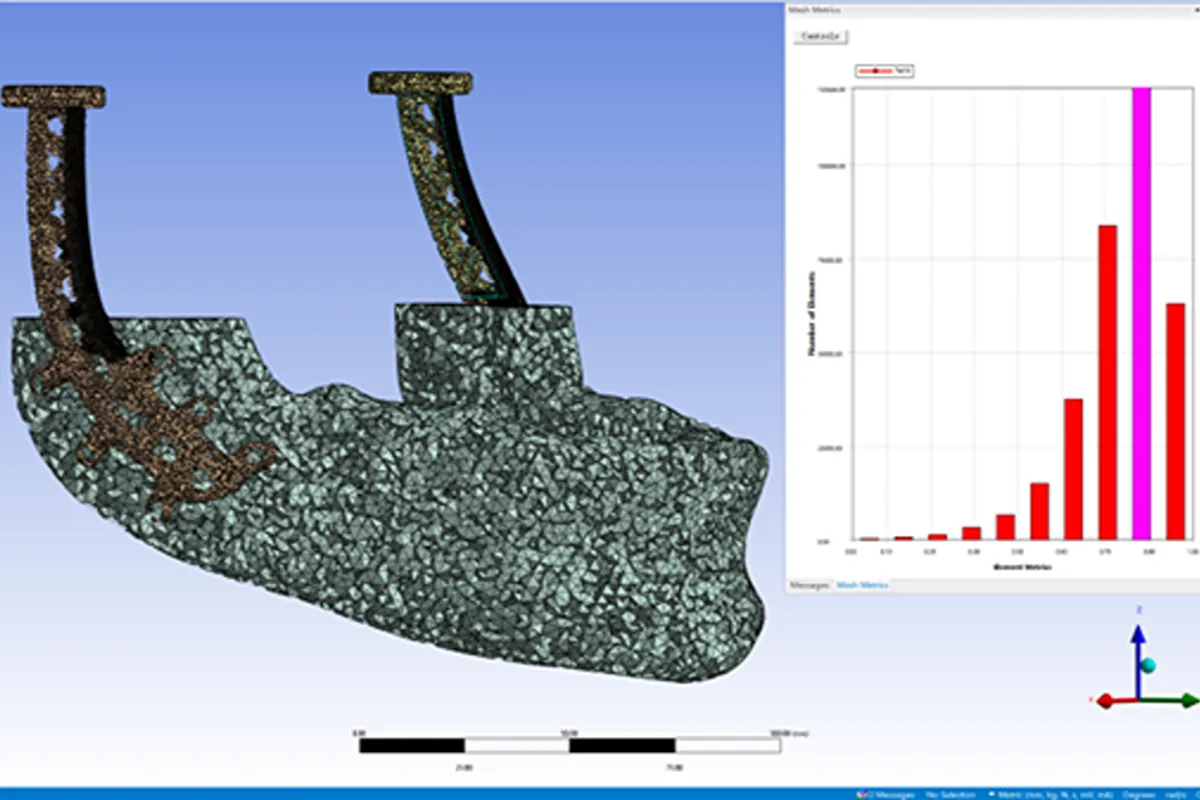
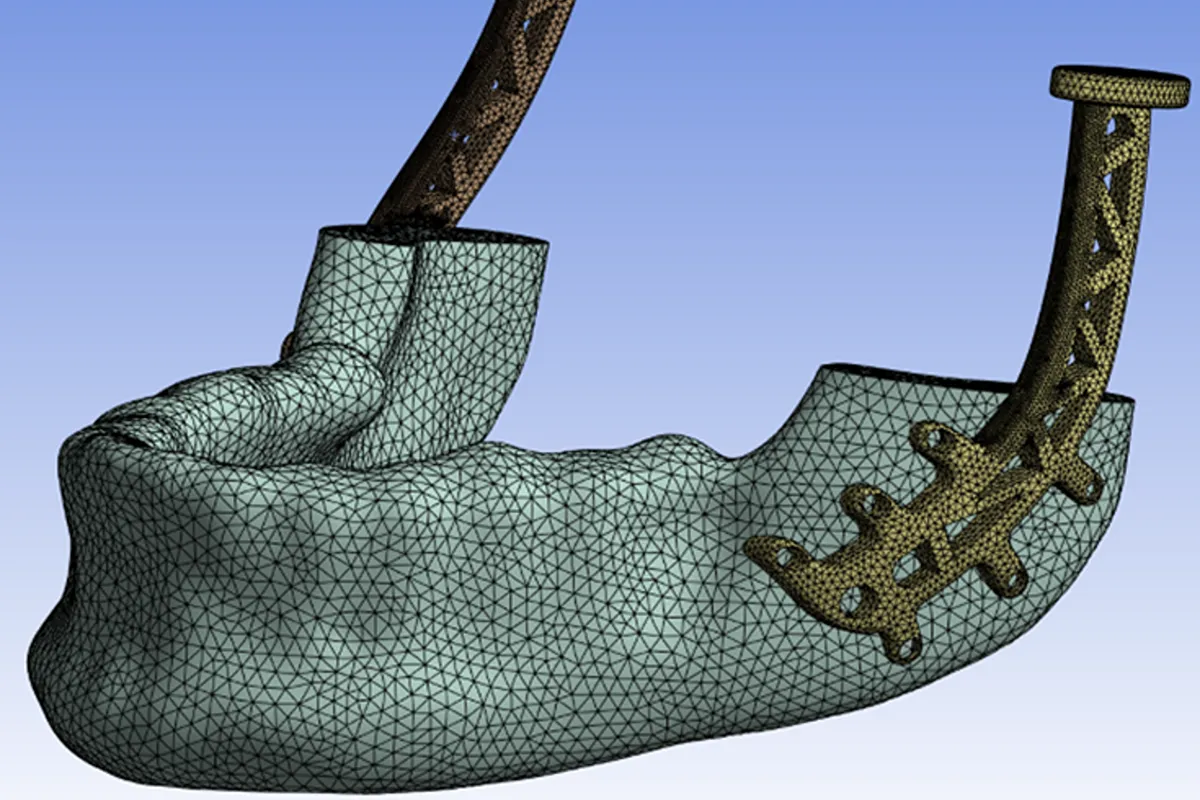
Inspect the supporting evidence ↓Global refinement exposed local stress spikes, prompting targeted refinement. The final local refinement changed stress by 2.33% and maximum deformation by 0.13% in the reported comparison.
Inspect the supporting evidence ↓The study compares 316L and Ti-6Al-4V under idealised loading. Fatigue uses fully reversed R=-1 loading and an appended S–N plateau; predicted life is model-dependent, not implant certification.
Inspect the supporting evidence ↓Academic FEA study using simplified geometry, constraints and fatigue assumptions. The 44.6% reduction compares two designed generations, not an implanted clinical device.
Ti-6Al-4V: 0.1314 → 0.0727 kg. The same geometric reduction is reported for 316L.
Reported refinement comparison; maximum deformation changed by 0.13%.
Idealised fully reversed loading and a constructed S–N plateau. No clinical performance claim.
Geometry, masses, mesh strategy and fatigue assumptions; later pages report modal analysis.
Related by practice, not just by category.
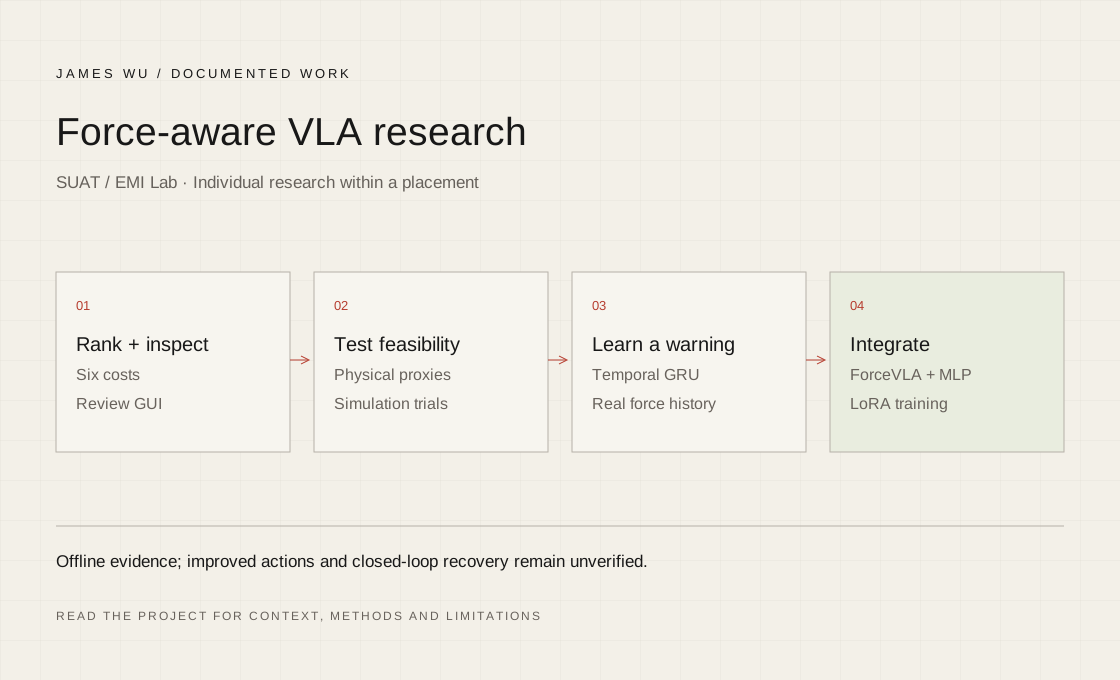
A standalone temporal model outperformed a current-force heuristic offline. The integrated ForceVLA risk head also learned the proxy risk signal; reliable action improvement and closed-loop performance remain unverified.
Independent projectIndependent research: trajectory ranking, simulation and risk-head training
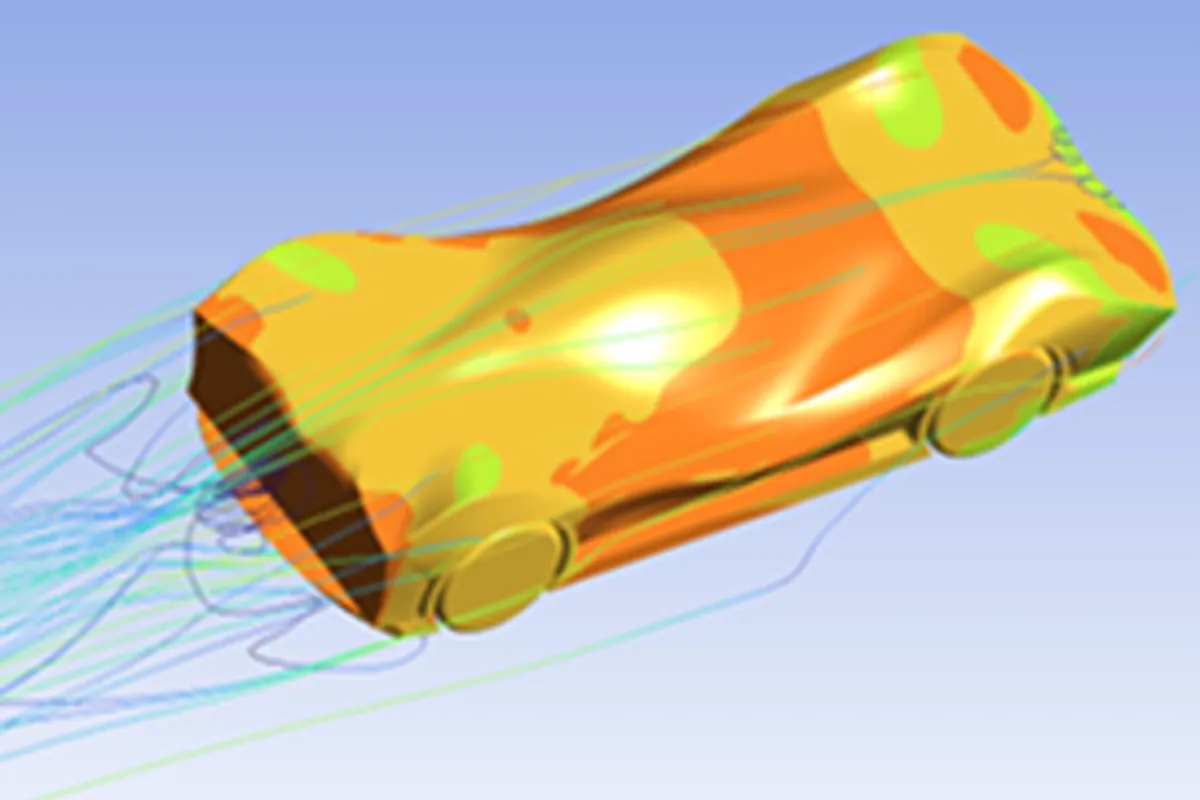
Refined the body, canopy, underbody and rear through CFD; the detailed report’s final Cd is 0.169, approximately 35% below the 0.26 initial concept.
Independent projectCAD, simulation and validation
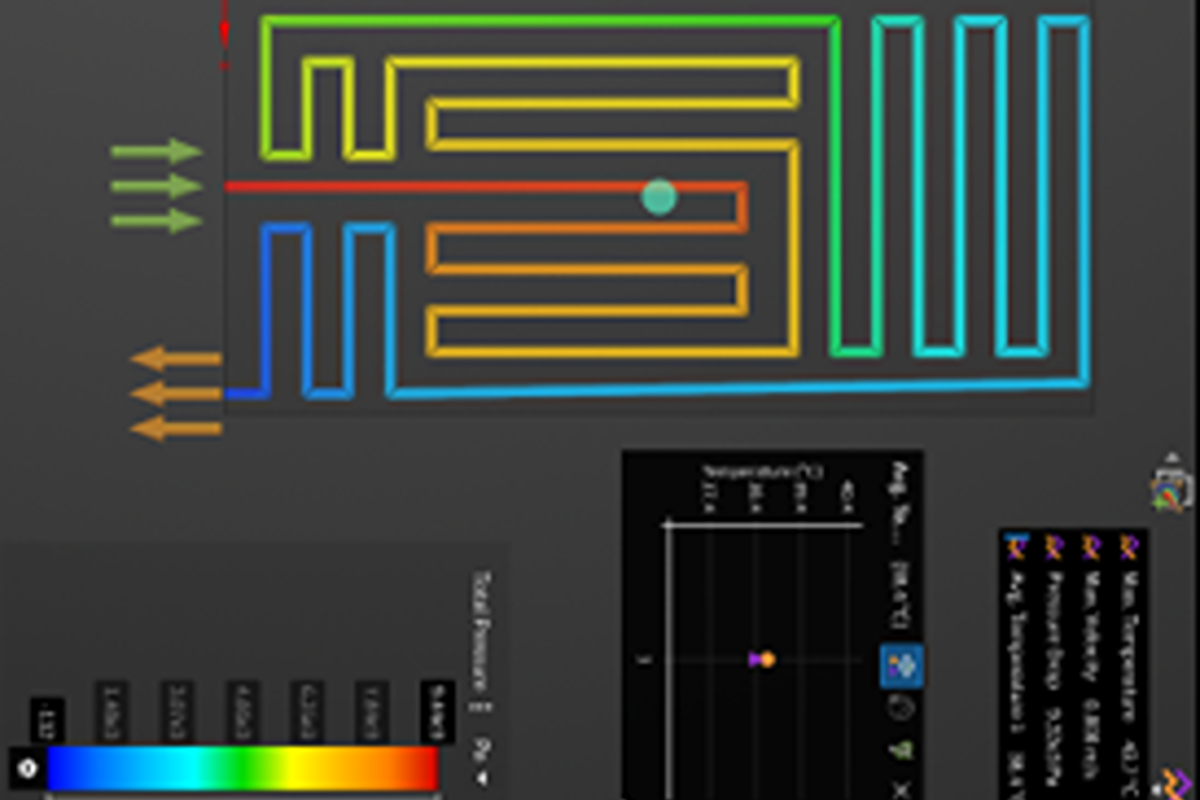
Under the assessed CFD boundary conditions, the design produced a pressure drop near 5.13 kPa and a 38.9°C average cell temperature.
Independent projectFlow-path design and simulation