Physical prototype
Assembly and operation were tested; it is a separate project from the unbuilt Furrigo concept.
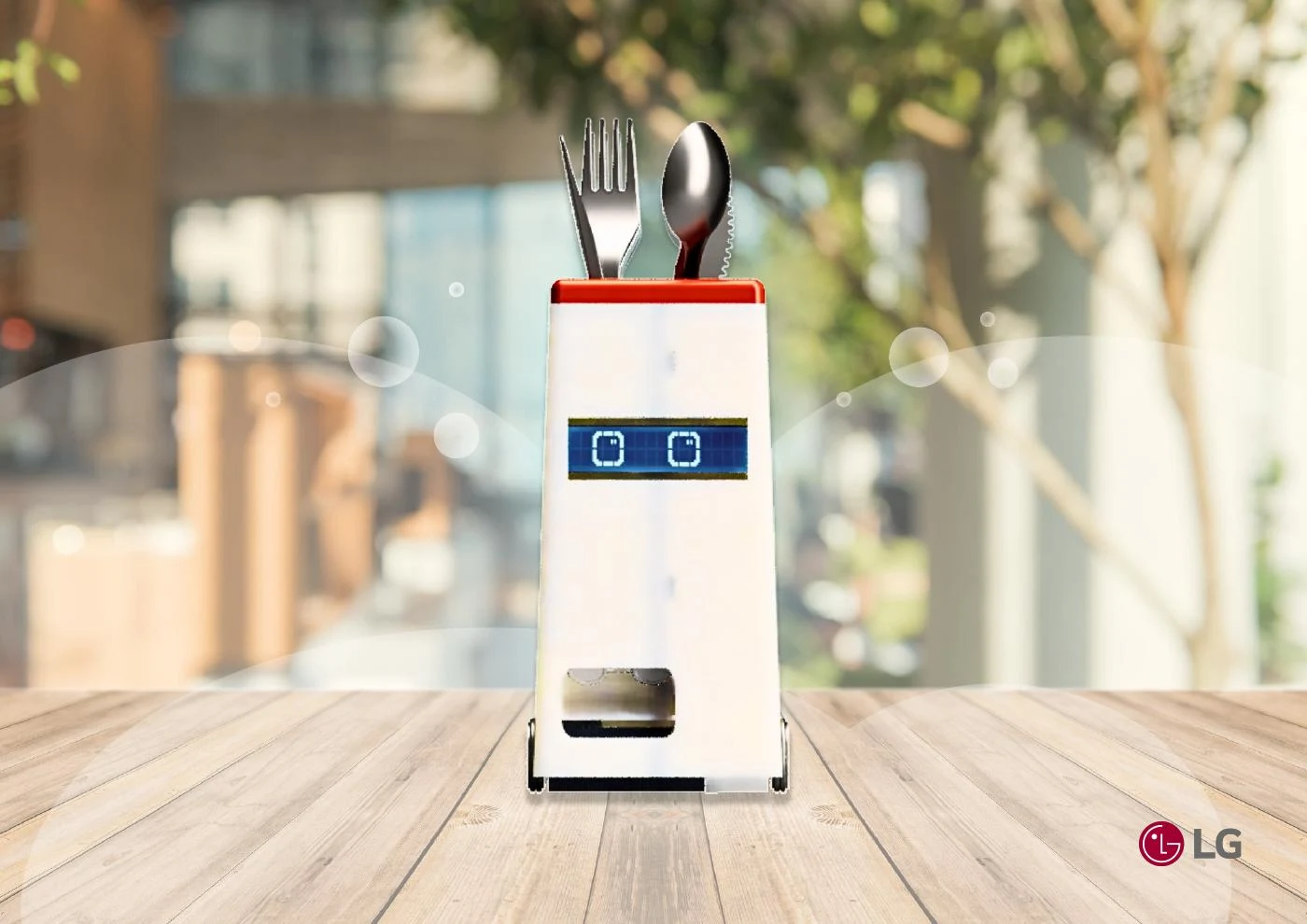
A group industrial-design project with a working tabletop cleaning prototype. The team developed a drop-and-wipe mechanism and CAD around manufacturing, assembly and disassembly; my focus was technical validation and hardware integration.
 Inspect full-size image ↗
Open a chapter to follow the work and the choices made along the way.
I tested the assembled prototype and worked on wiring, soldering and component fit. Physical tests exposed shaft interference, tight tolerances, cable-routing problems, ground clearance and balance issues.
Inspect the supporting evidence ↓The report documents a move from Raspberry Pi to Arduino Uno R3, a 5 V powerbank system and revised components. My contribution included component adaptation and power/load calculations.
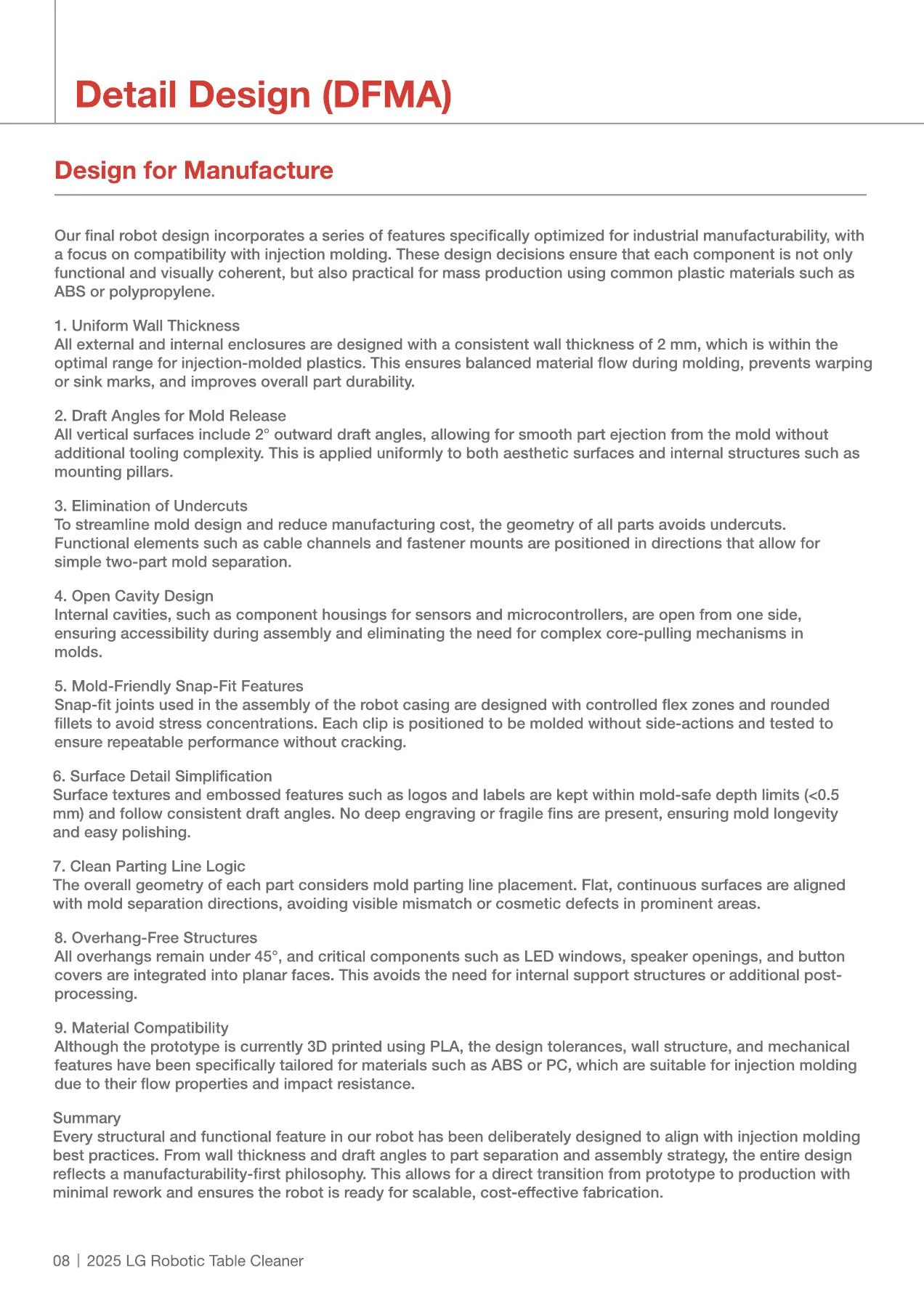
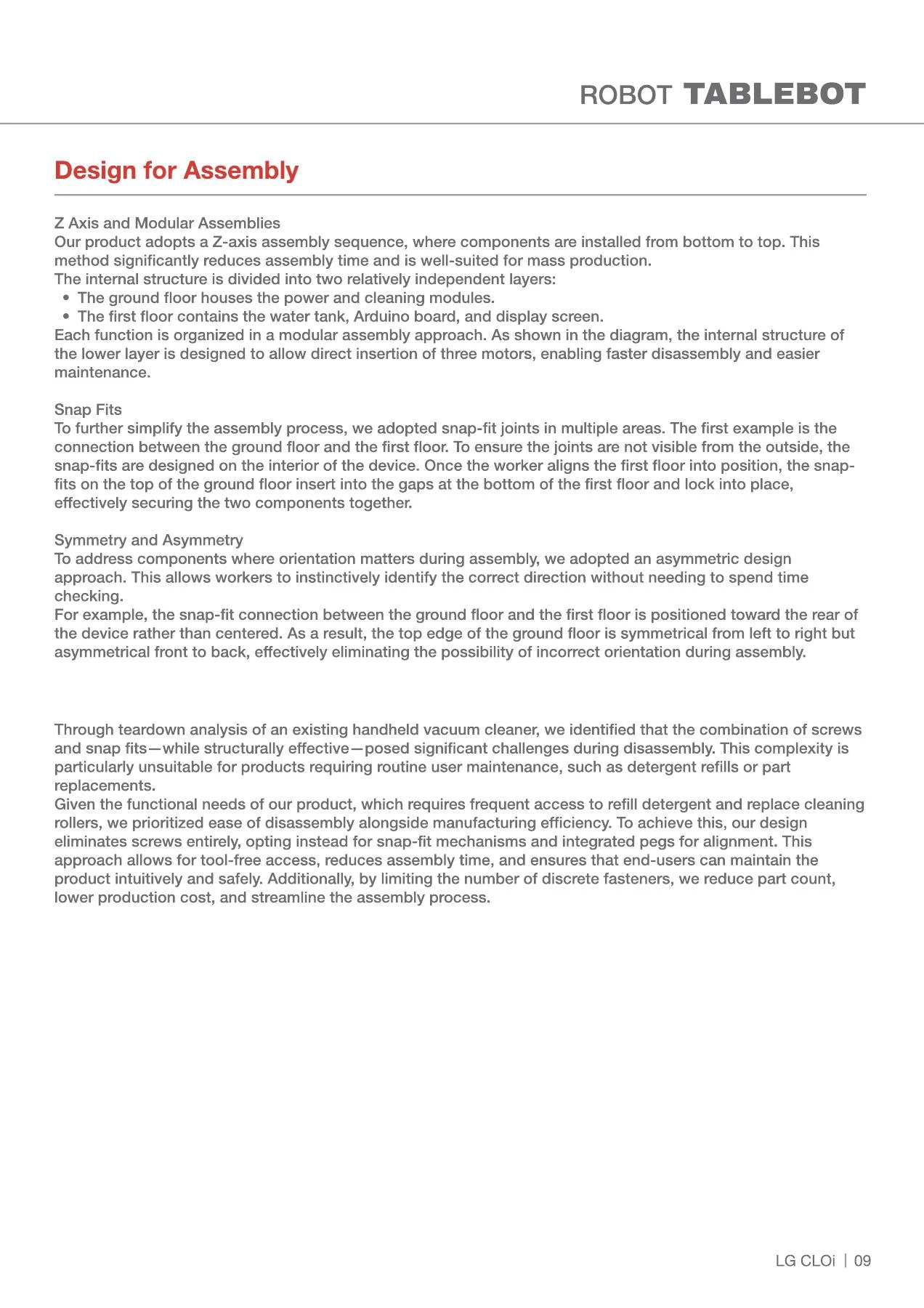
Inspect the supporting evidence ↓The team’s CAD uses a 2 mm wall-thickness target, 2° draft, bottom-up assembly and modular snap-fit features. Manufacturing-oriented CAD remains distinct from the 3D-printed prototype.
Inspect the supporting evidence ↓Group course project with a working prototype. Production CAD, compliance research and labels are design work, not certification or commercial deployment. LG-inspired branding is a course design reference, not a claim of employment or an official LG product.
Assembly and operation were tested; it is a separate project from the unbuilt Furrigo concept.
Manufacturing, assembly and disassembly considered together in CAD.
Physical/digital tests, wiring, assembly, soldering, component fit and power calculations.
Integration, physical/digital testing, power calculations and manufacturing/assembly design.
Explicit team roles and James Wu’s contribution.
TableBot is a built group project; Furrigo is a separate unbuilt personal concept.
Related by practice, not just by category.
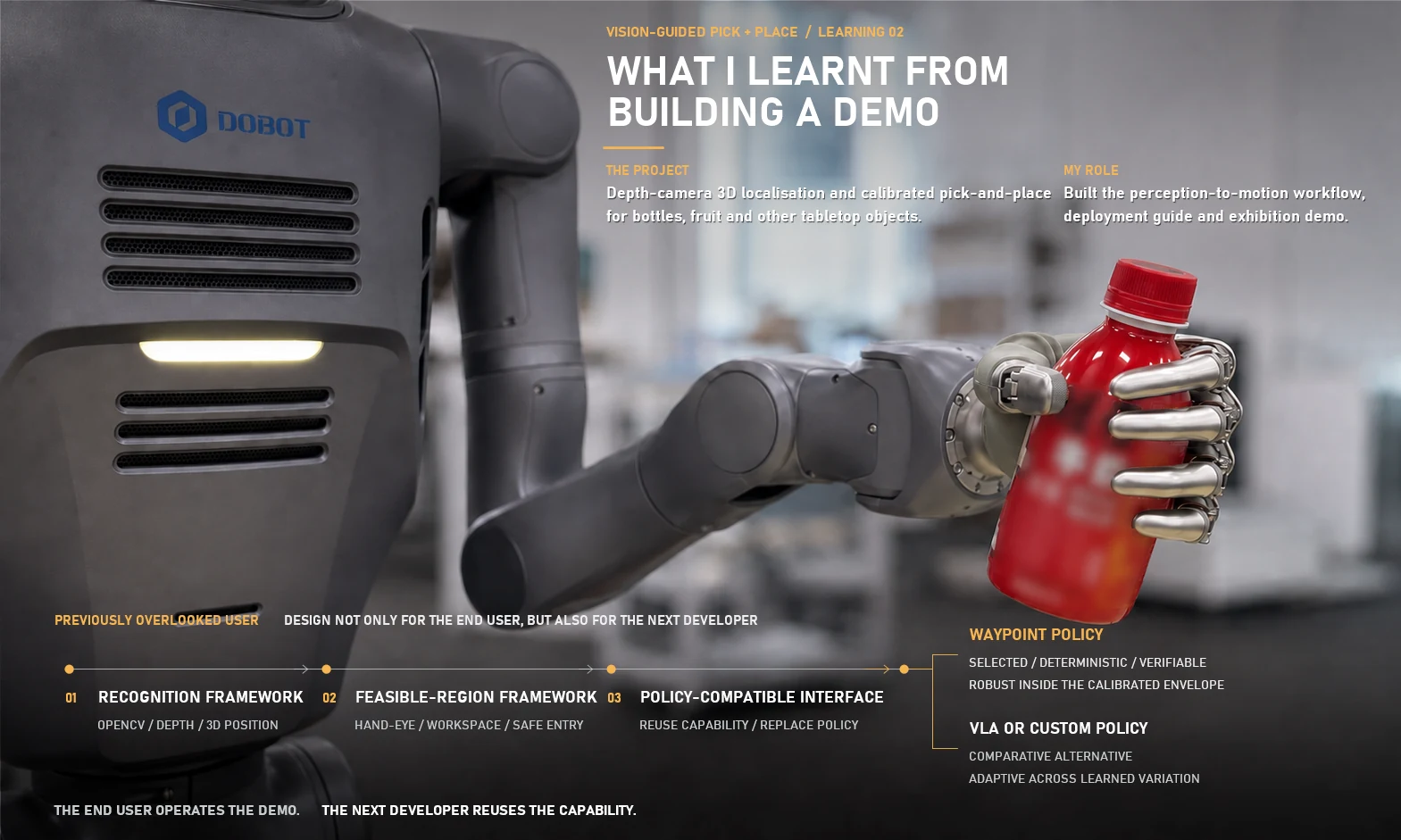
Hands-on experience connecting physical robots, perception, control and services through task demonstrations, teleoperation, navigation experiments and hardware work.
My partTechnical Support Engineer Intern · robot applications and testing
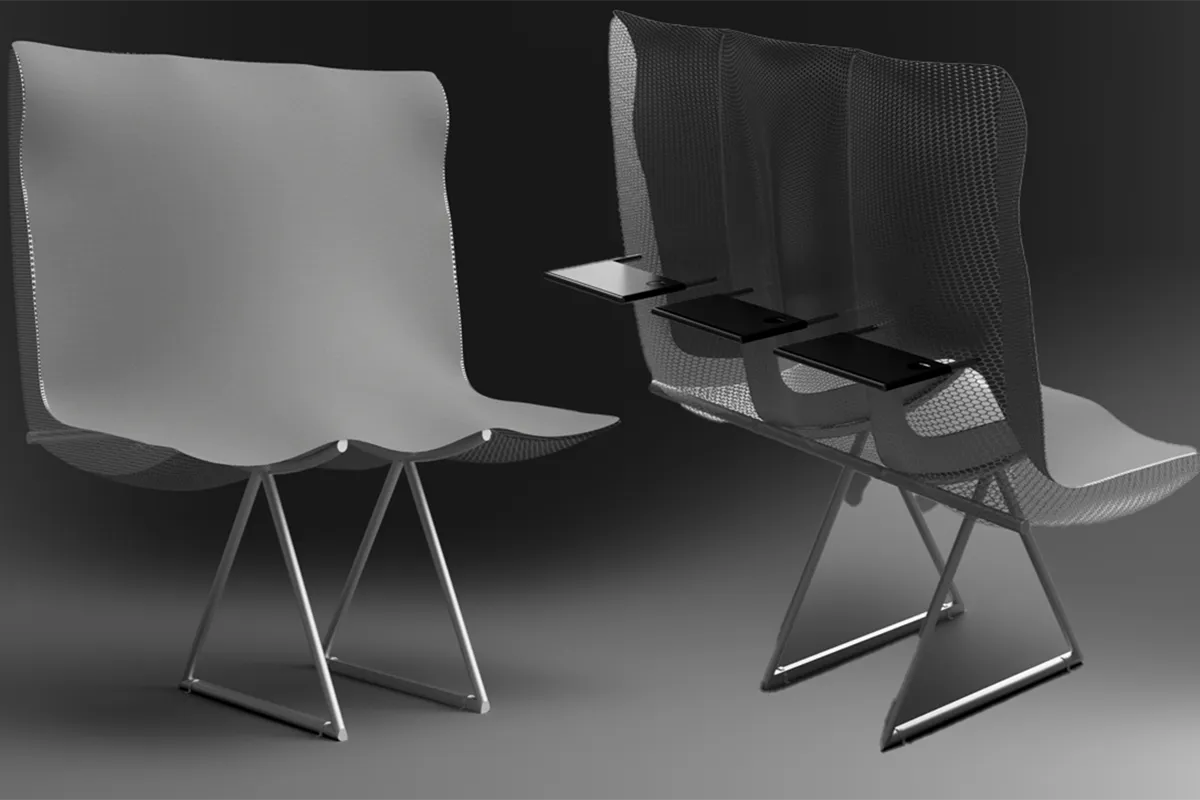
Contributed the materials, manufacturing and assembly proposal to a group seat concept, alongside shared lifecycle and circularity studies.
My partMaterials, manufacturing and assembly within a group design
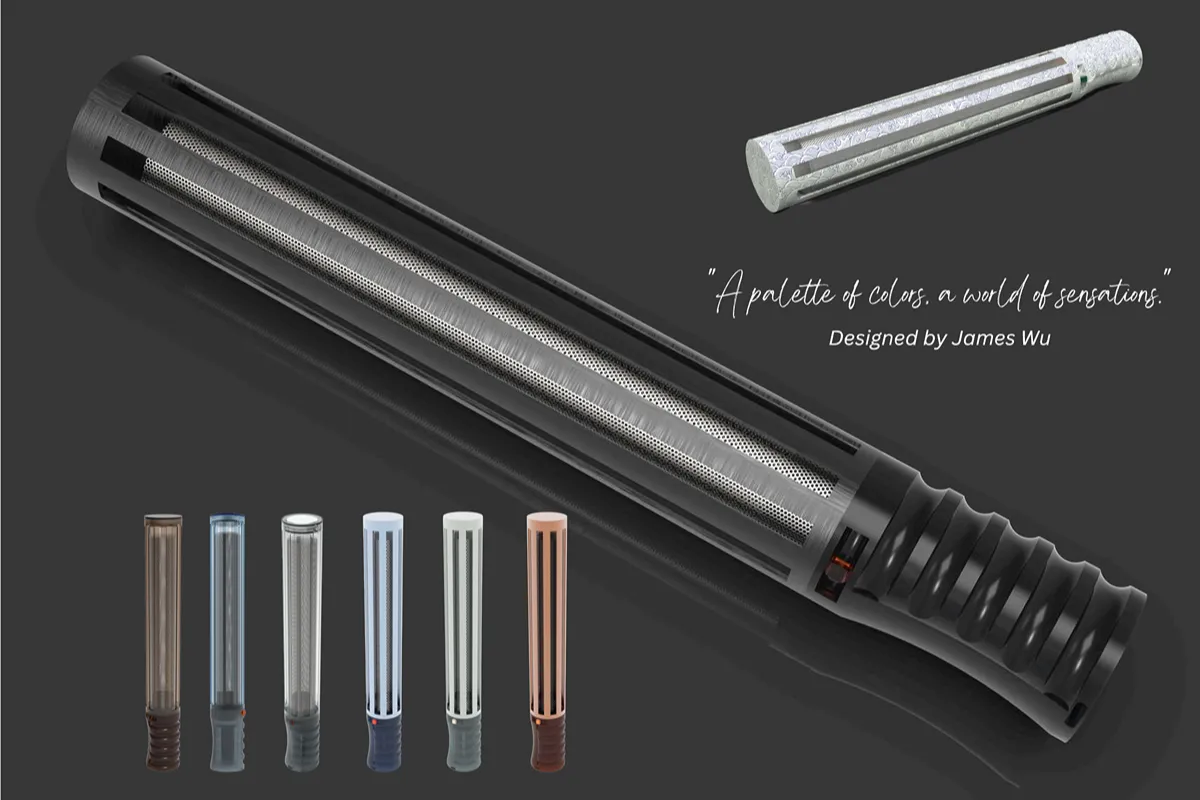
A documented product concept with two cleaning mechanisms, internal CAD assembly, material choices and a removable protective cage.
Independent projectUser research, concept development and mechanical design