My documented contribution
Material, manufacturing and assembly work, explicitly credited in the final contribution statement.
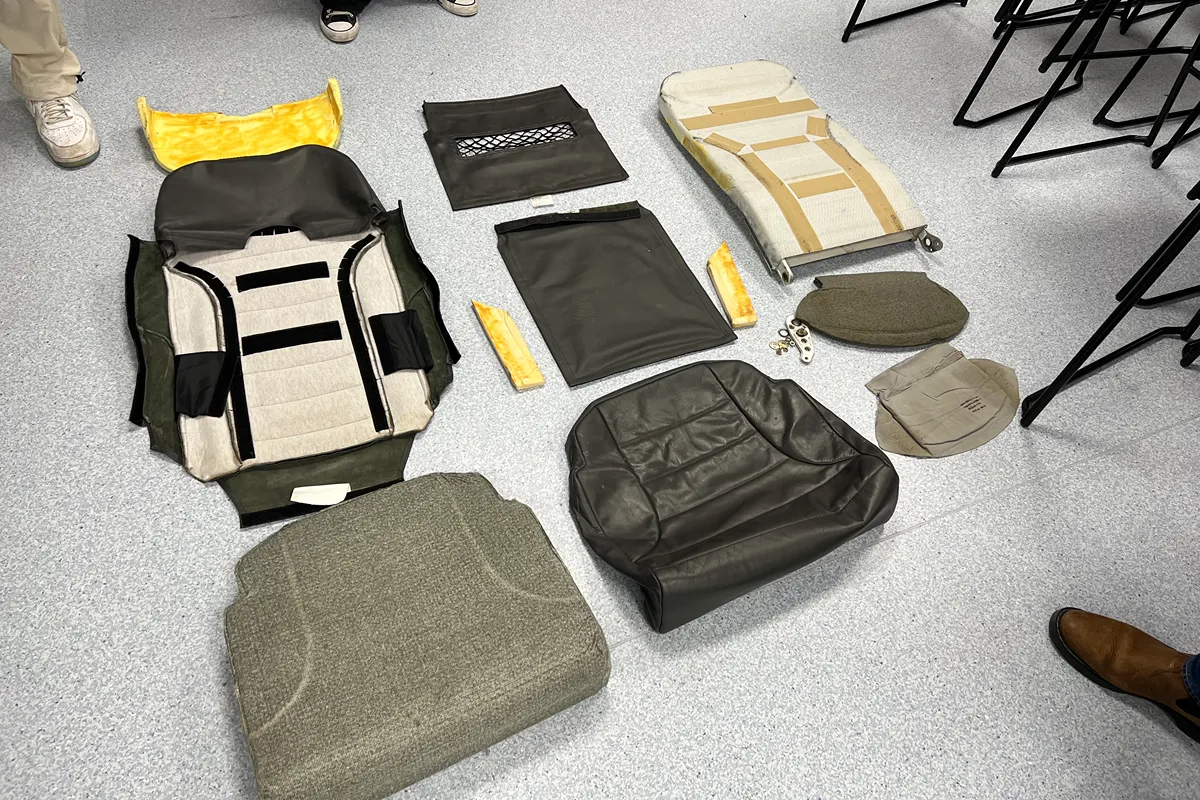
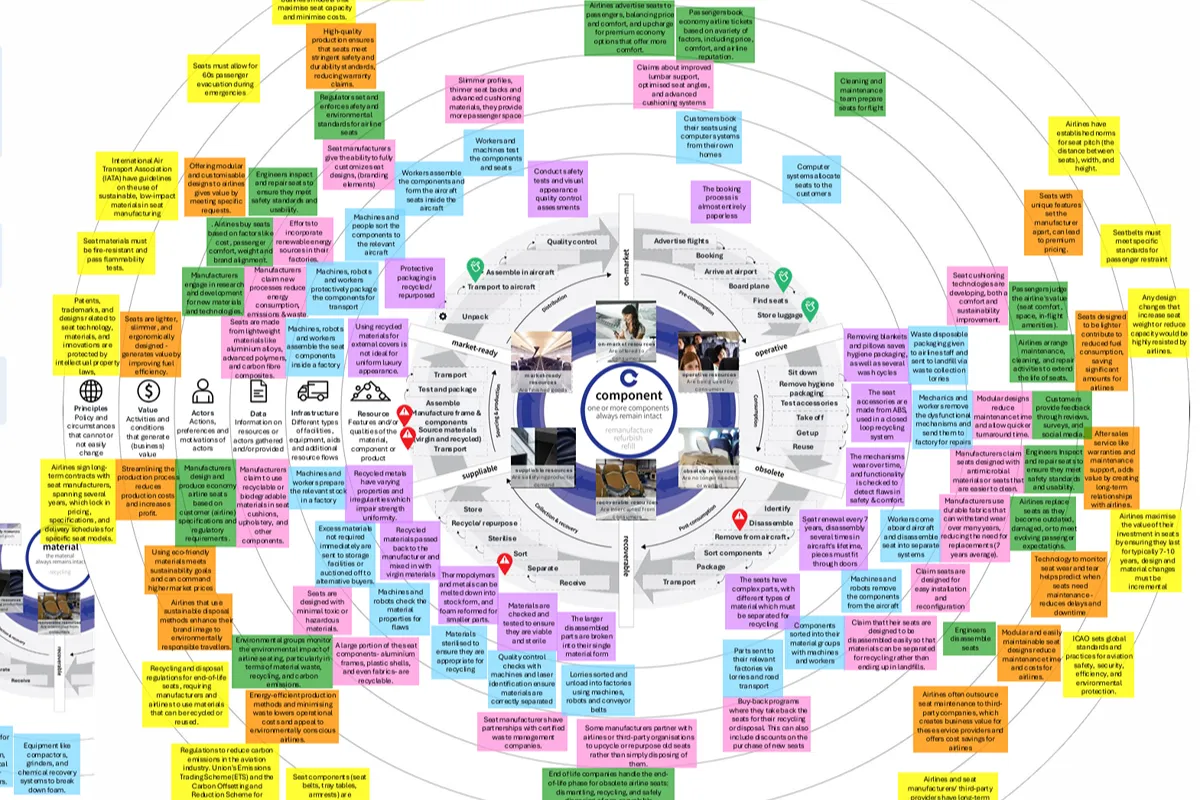
A group study of aircraft seating as a circular product-service system. My work focused on material choices, manufacturing routes and assembly of the primary structure, secondary systems and accessories.
 Inspect full-size image ↗
Open a chapter to follow the work and the choices made along the way.
My contribution covers the primary structure, secondary systems and accessories: material selection, manufacturing processes and structural assembly.
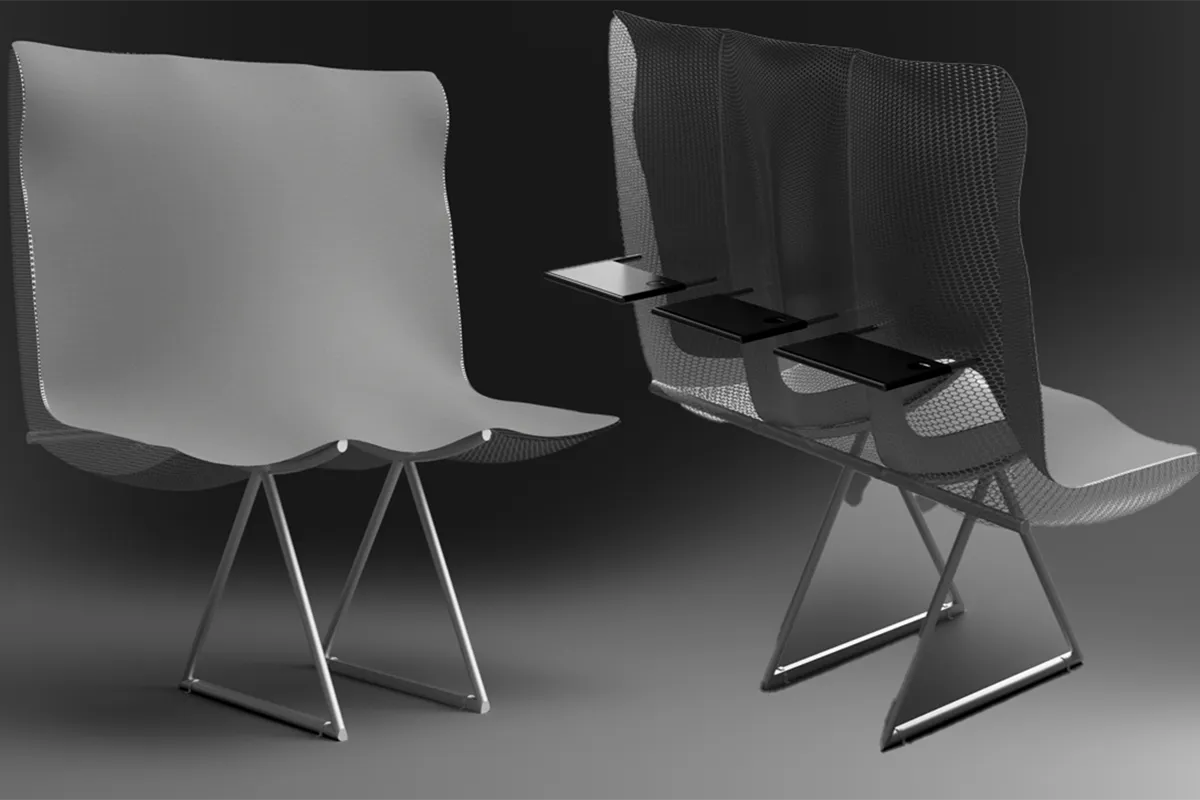
Inspect the supporting evidence ↓The group concept separates the long-life frame from replaceable mesh and accessories, within a proposed leasing, maintenance and recovery system.
Inspect the supporting evidence ↓Group concept study. Whole-product CAD and lifecycle calculations are team outputs. Mass estimates differ across report submissions, so no single final reduction percentage is presented.
Material, manufacturing and assembly work, explicitly credited in the final contribution statement.
Replace worn parts without replacing the entire seat; connect maintenance to material recovery.
Lifecycle and mass estimates belong to specific design iterations, not a certified production seat.
Final system proposal and individual contribution statement on p. 24.
Earlier submission; its weight estimates are not interchangeable with the final system.
Related by practice, not just by category.
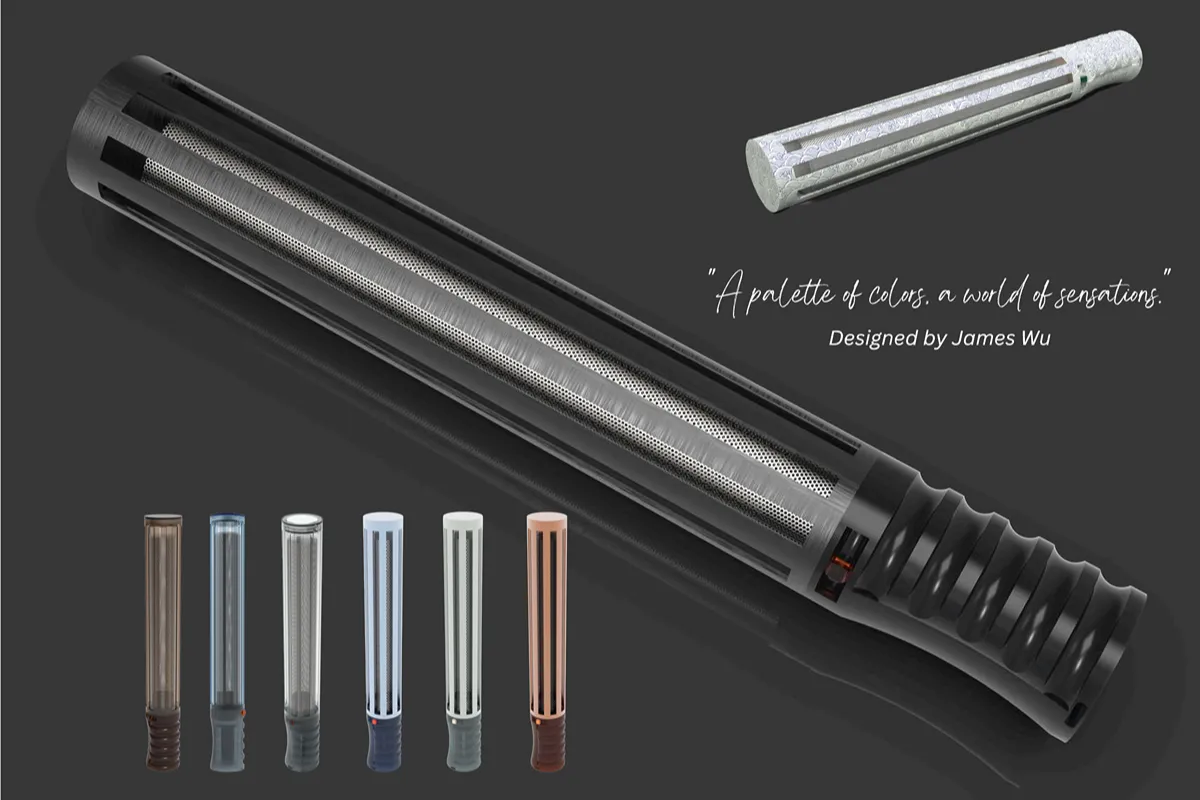
A documented product concept with two cleaning mechanisms, internal CAD assembly, material choices and a removable protective cage.
Independent projectUser research, concept development and mechanical design
Built and tested a physical prototype, identifying fit, wiring, power and control issues. The production-oriented CAD proposes injection-moulded parts and modular assembly; it is not evidence of mass production.
My partPrototype testing, wiring, assembly, soldering and power calculations
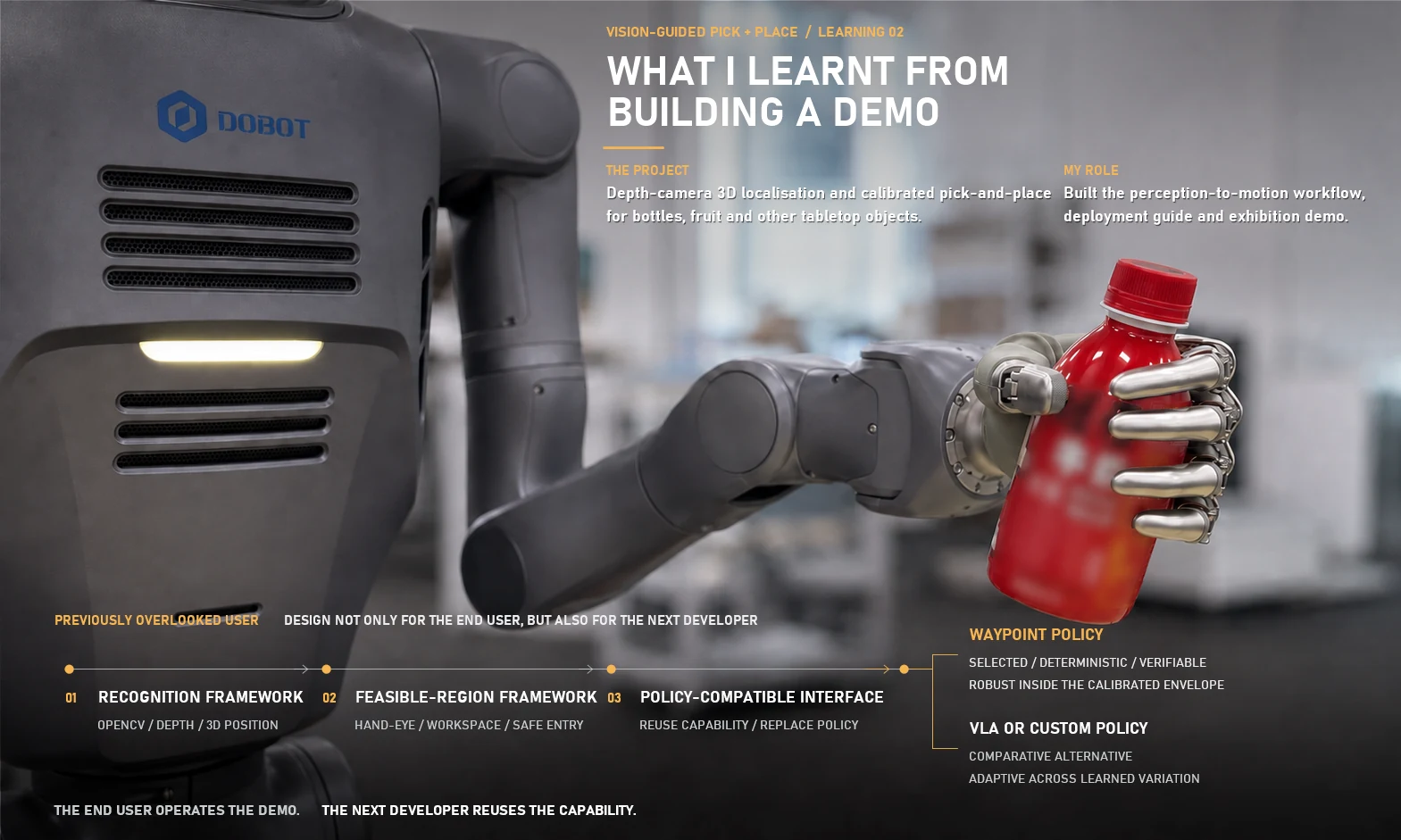
Hands-on experience connecting physical robots, perception, control and services through task demonstrations, teleoperation, navigation experiments and hardware work.
My partTechnical Support Engineer Intern · robot applications and testing