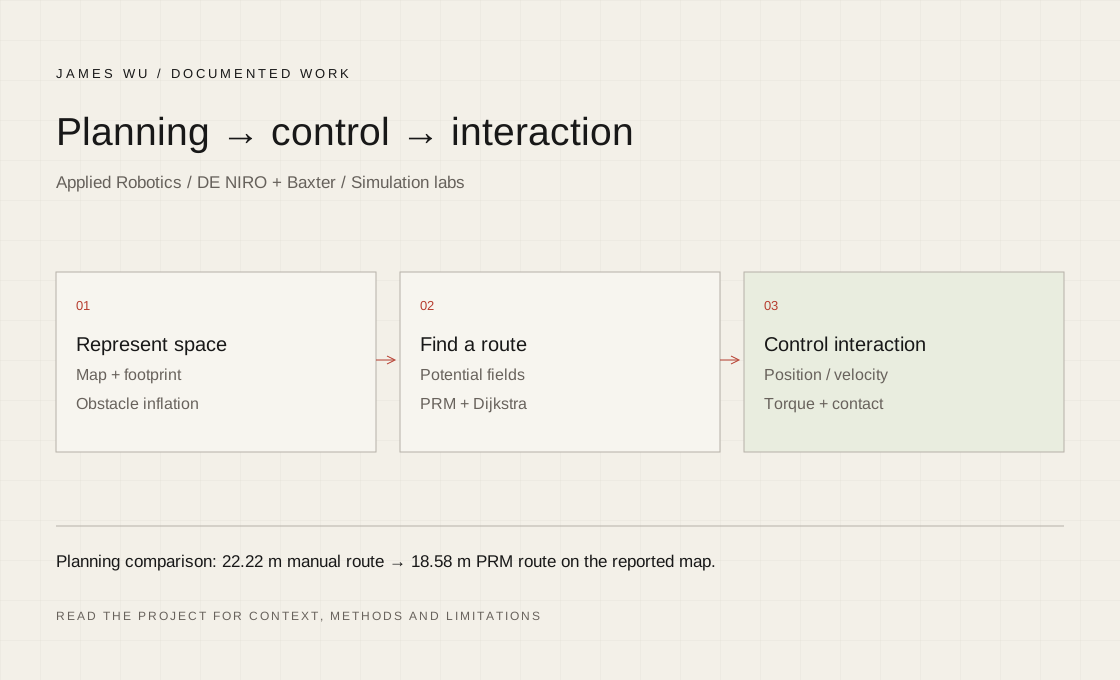
Reported geometric route length
Manual waypoints → PRM + Dijkstra on the same map; approximately 16.4% shorter, not a travel-time gain.
Third-year robotics labs using DE NIRO and Baxter in simulation. I worked through mobile-robot planning, dual-arm handover, Jacobian-based velocity control, redundancy resolution and contact tasks.
 Inspect full-size image ↗
Open a chapter to follow the work and the choices made along the way.
Inflate obstacles using the robot footprint, then compare hand-picked waypoints, potential fields and PRM plus Dijkstra on the same indoor map.
Inspect the supporting evidence ↓The reported geometric route changes from 22.22 m to 18.58 m. Graph density and connections affect this result; sharper turns and lower clearance can still make tracking harder.
Inspect the supporting evidence ↓Jacobian-based velocity commands and null-space projection combine an end-effector task with an elbow obstacle-avoidance objective.
Inspect the supporting evidence ↓For sponge wiping, the corrected controller takes angular velocity from J(q)·q̇ rather than orientation values. Adding rotational damping improved the simulated contact posture.
Inspect the supporting evidence ↓Individually completed course labs, confirmed by James. Results are simulation-specific; Dijkstra is optimal on the sampled graph, not guaranteed globally optimal in continuous space.
Manual waypoints → PRM + Dijkstra on the same map; approximately 16.4% shorter, not a travel-time gain.
Position for transfer, velocity for path following, torque for dynamic/contact tasks.
DE NIRO / Baxter course tasks completed individually in simulation.
C-space, planner implementation and route-length comparison on pp. 25–26.
DE NIRO / Baxter manipulation, redundancy and contact control; wiping correction on pp. 34–35.
Labs 1, 2 and 3 were each completed individually; shared report cover names do not define implementation ownership.
Related by practice, not just by category.
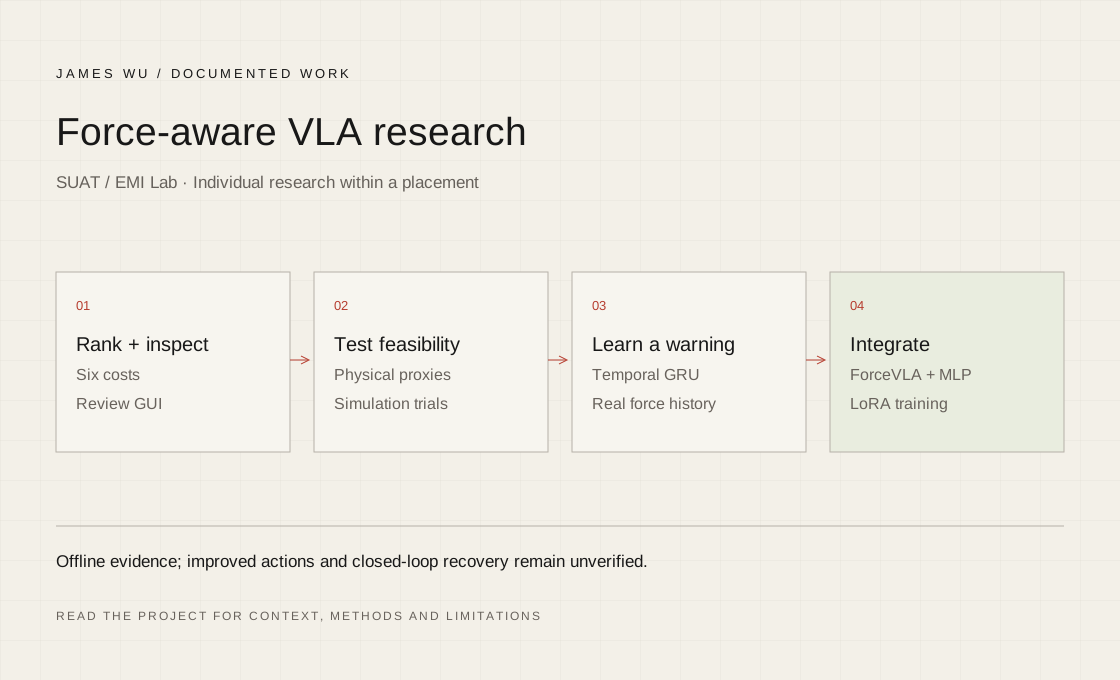
A standalone temporal model outperformed a current-force heuristic offline. The integrated ForceVLA risk head also learned the proxy risk signal; reliable action improvement and closed-loop performance remain unverified.
Independent projectIndependent research: trajectory ranking, simulation and risk-head training
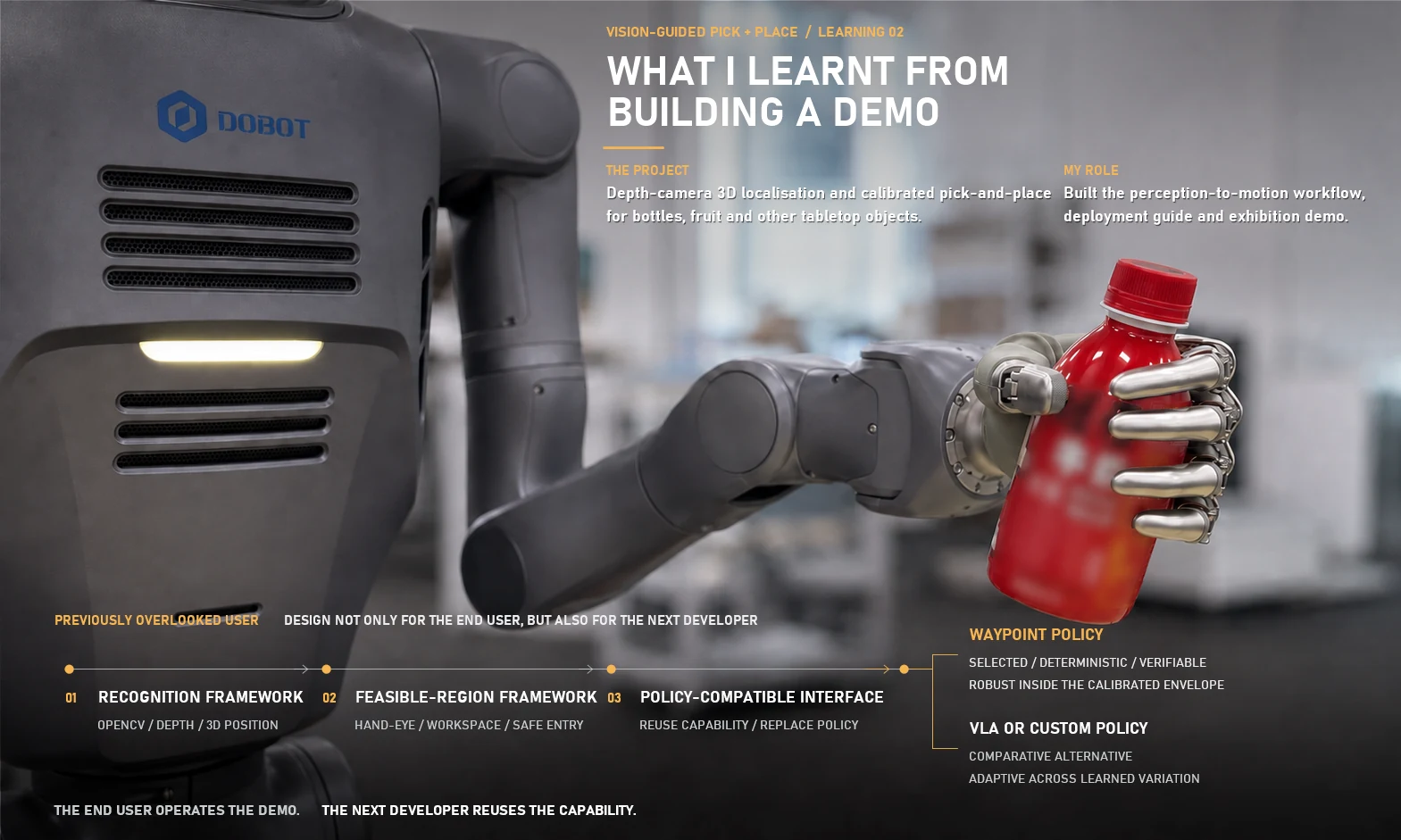
Hands-on experience connecting physical robots, perception, control and services through task demonstrations, teleoperation, navigation experiments and hardware work.
My partTechnical Support Engineer Intern · robot applications and testing
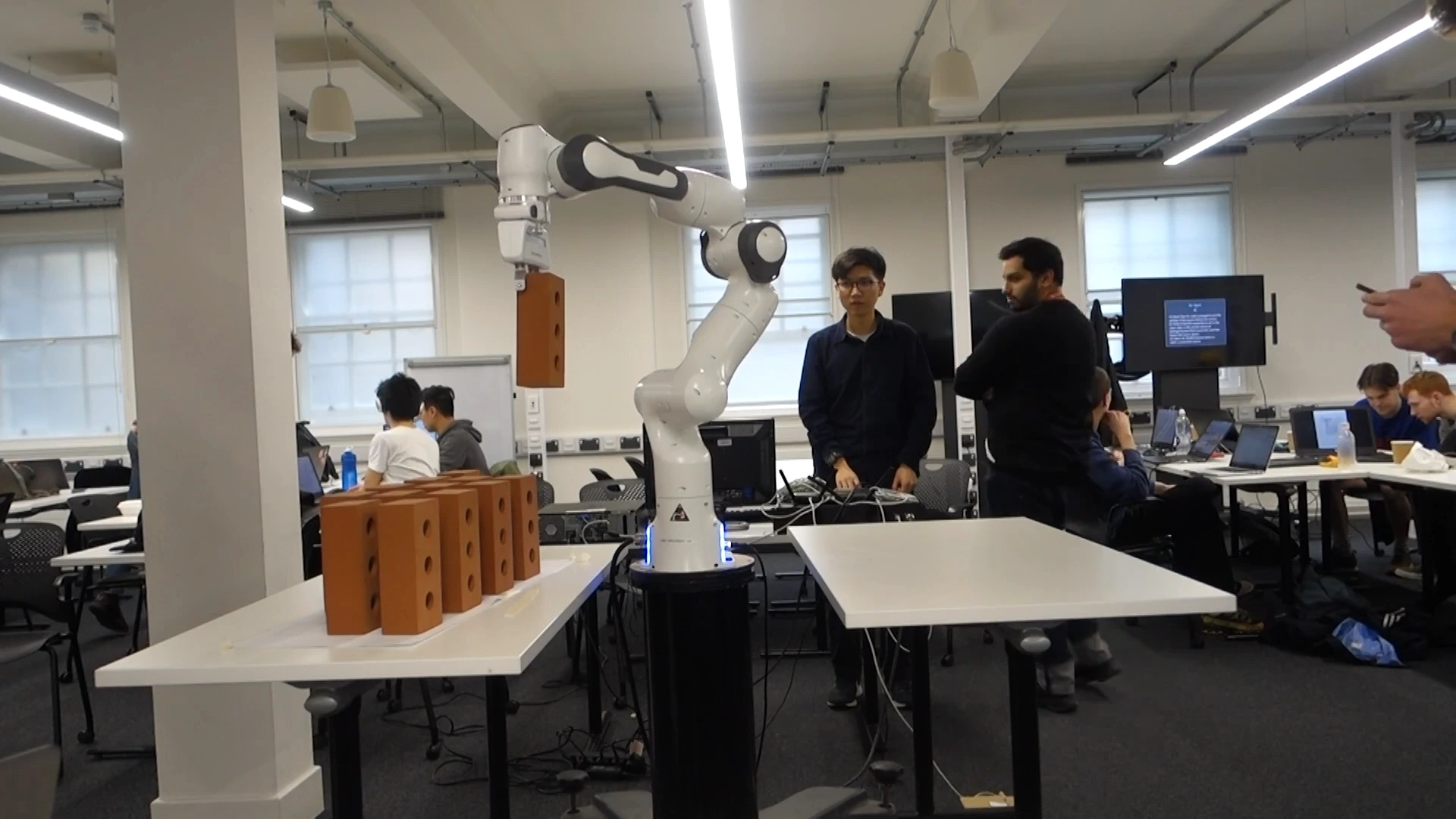
Completed basic physical-arm manipulation and brick-stacking tasks using waypoint-defined motions.
Independent projectRobot operation and waypoint setup