Proposed starter-kit price
Business-model input; not a current product offer.
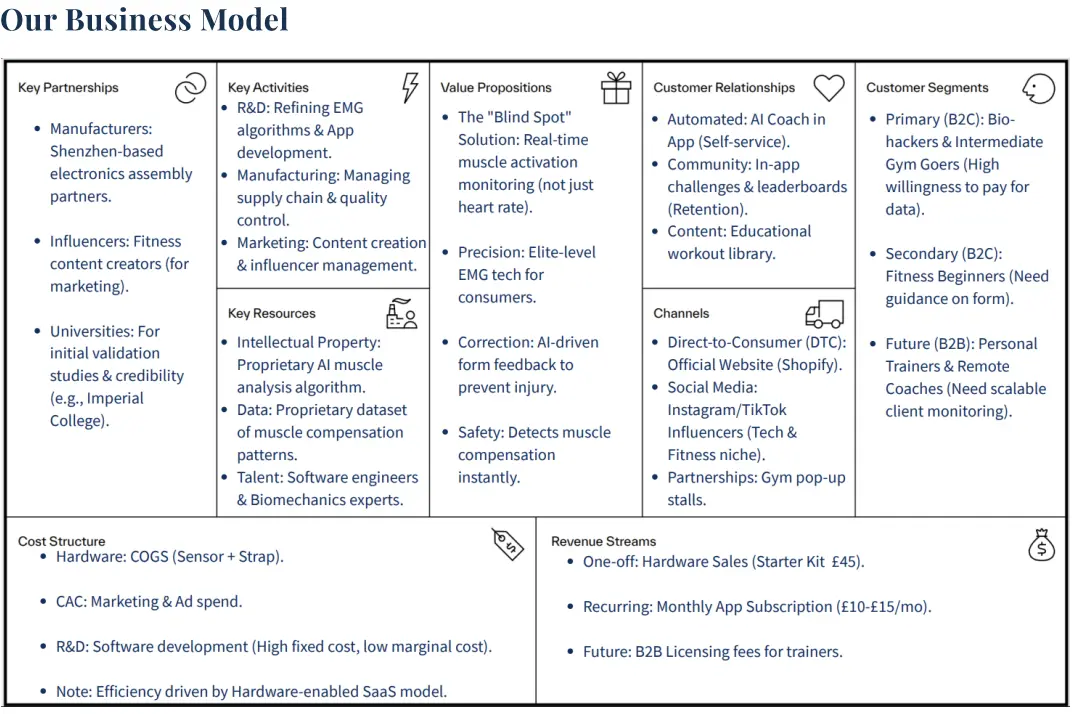
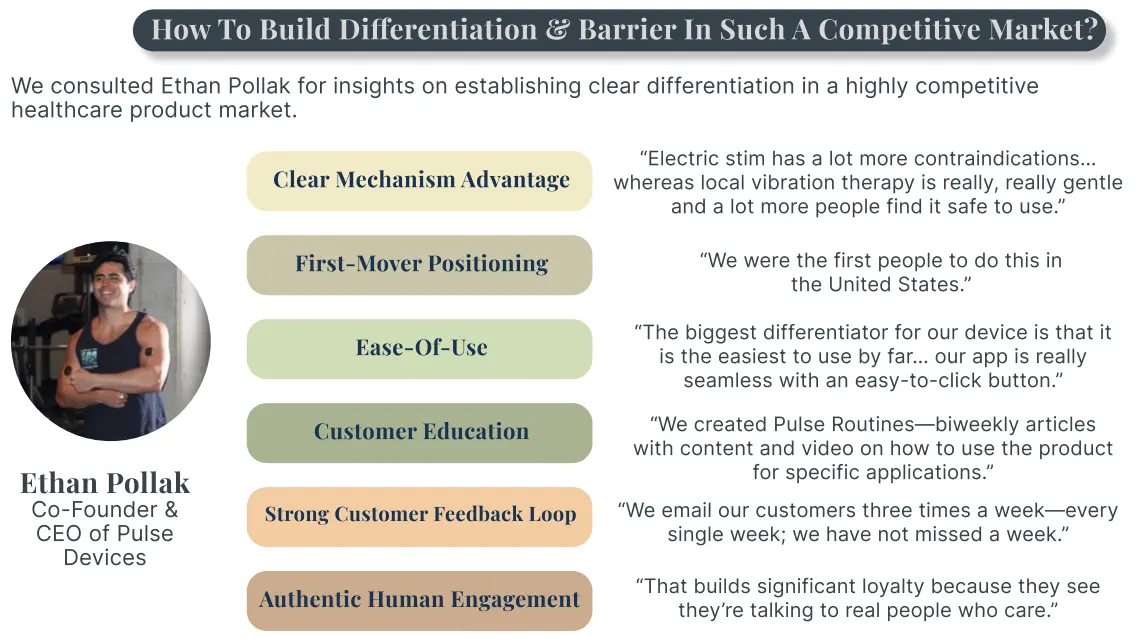
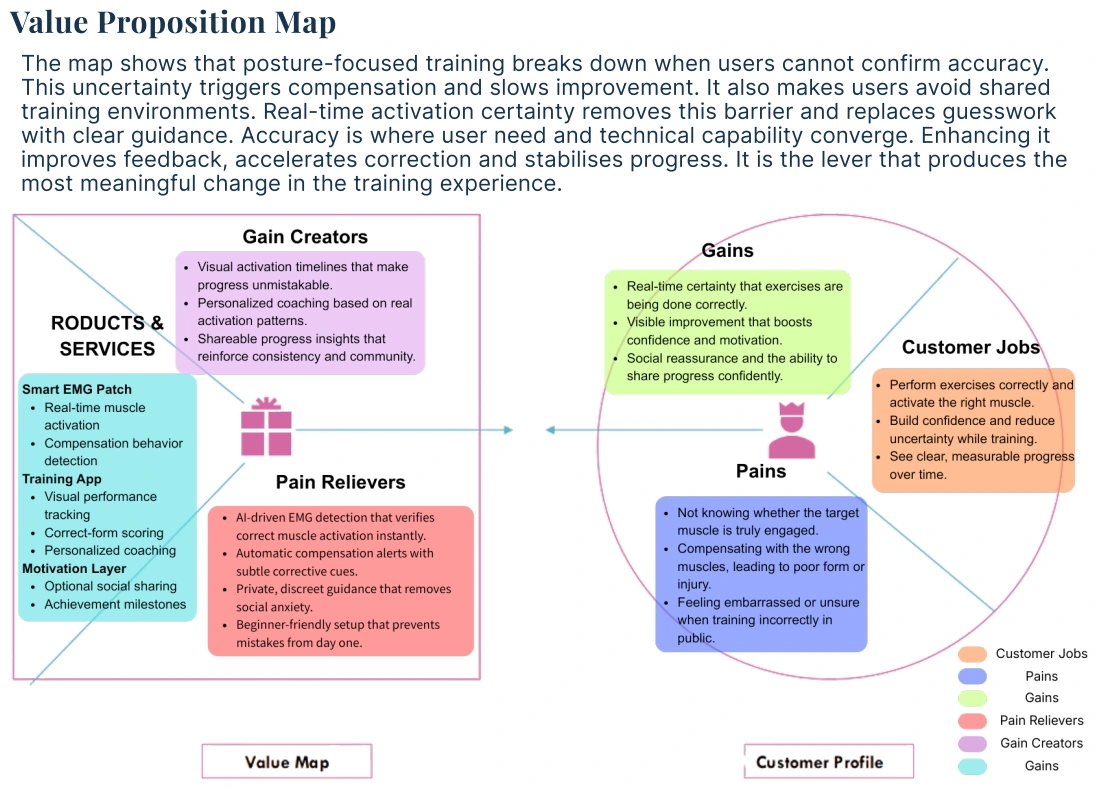
A product and business proposal for an EMG feedback system for everyday gym users. The work connects user needs, competing concepts, expert feedback, a hardware-plus-subscription model and commercial assumptions.
 Inspect full-size image ↗
Open a chapter to follow the work and the choices made along the way.
The experience was framed around decisions an athlete can make, not raw EMG novelty.
Inspect the supporting evidence ↓Technical feasibility, channels and unit economics were evaluated as a coupled system.
Inspect the supporting evidence ↓Product strategy and business modelling. Prices, conversion, retention and margins are proposal assumptions; efficacy, injury prevention and commercial traction have not been established.
Business-model input; not a current product offer.
Baseline assumes 18 months paid retention, a £11.6 weighted monthly subscription and 90% SaaS gross margin.
Sensitivity analysis, not observed customer retention.
Value proposition, planned channels, unit economics and scenario assumptions.
Related by practice, not just by category.
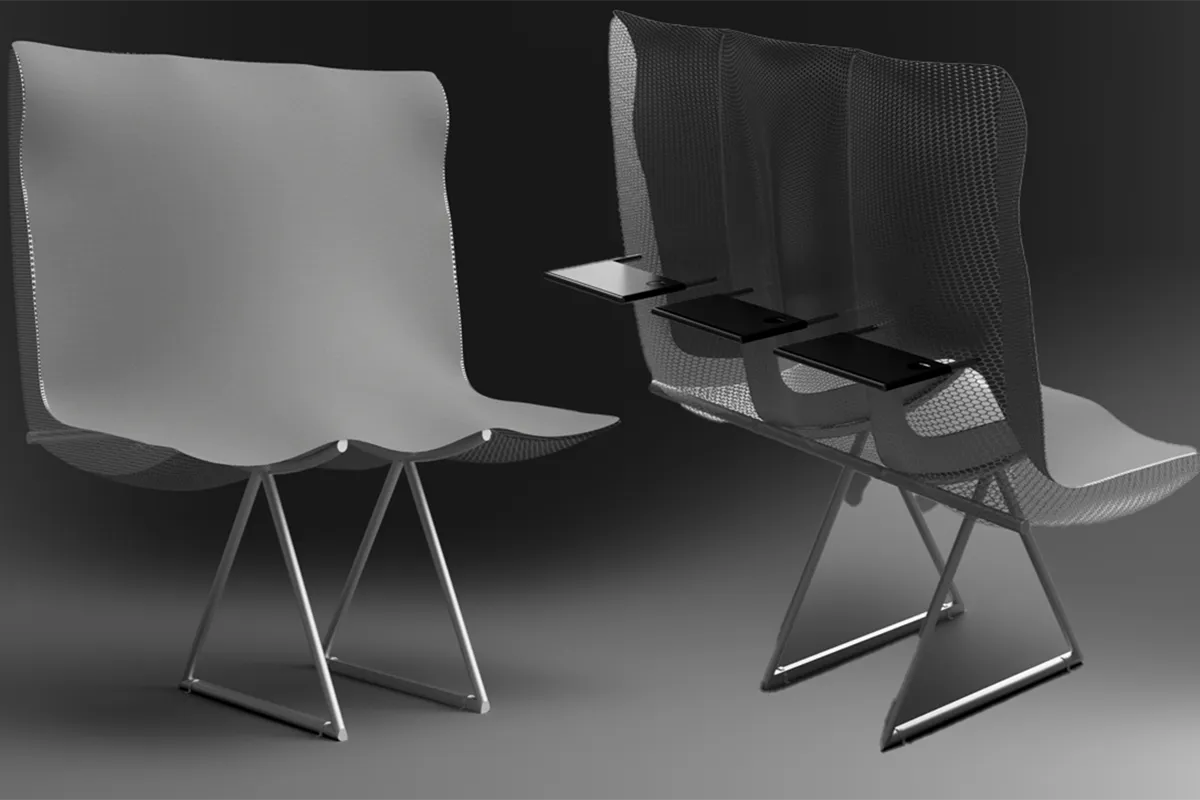
Contributed the materials, manufacturing and assembly proposal to a group seat concept, alongside shared lifecycle and circularity studies.
My partMaterials, manufacturing and assembly within a group design
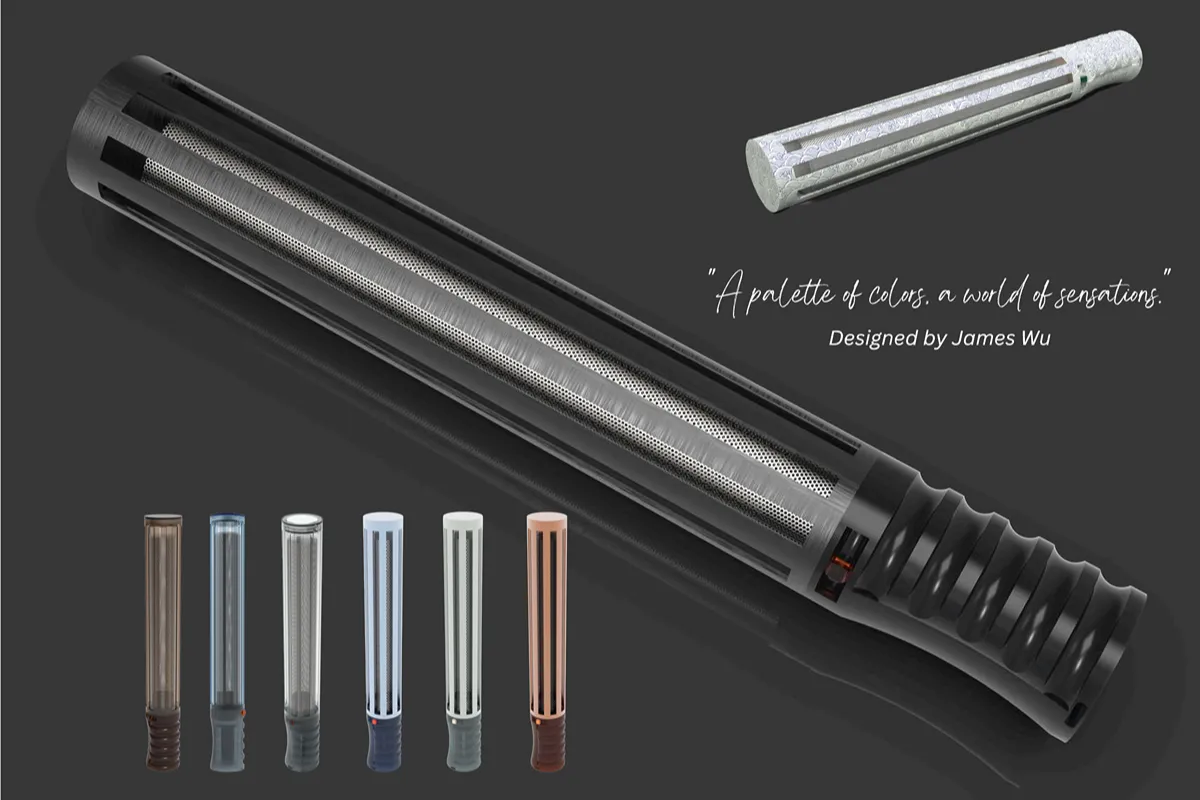
A documented product concept with two cleaning mechanisms, internal CAD assembly, material choices and a removable protective cage.
Independent projectUser research, concept development and mechanical design
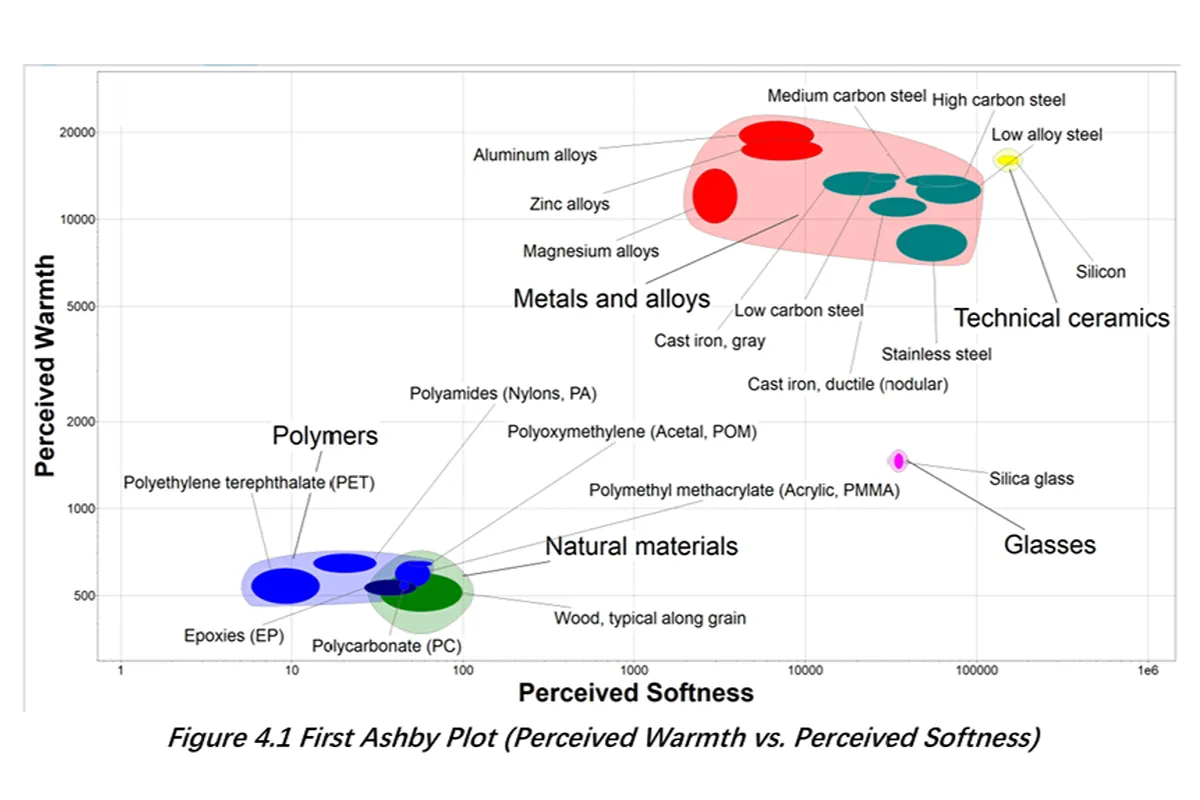
Selected wood after screening and comparing five shortlisted materials. The project is a selection exercise, not a certified toy product.
Independent projectMaterials and safety analysis